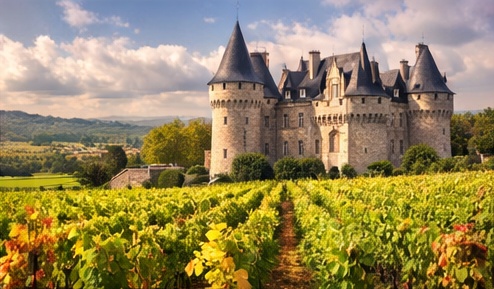
Burgundy is the spiritual home of terroir-driven winemaking. Along the narrow, east-facing slopes of the Cote d'Or, a patchwork of precisely delineated vineyards known as climats produces wines of haunting complexity from just two principal grape varieties. Here, the producer matters as much as the vineyard, and a few rows of vines can mean the difference between a village wine and a Grand Cru of legendary status.
The Cote de Nuits
Stretching from Gevrey-Chambertin in the north to Nuits-Saint-Georges in the south, the Cote de Nuits is the red wine heartland of Burgundy. This narrow strip of hillside, rarely more than a few hundred metres wide, contains some of the most valuable agricultural land on earth. The grands crus here read like a roll call of vinous royalty: Romanee-Conti, Chambertin, Musigny, Clos de Vougeot, Richebourg and Echezeaux. Pinot Noir finds its ultimate expression on these limestone and marl soils, producing wines of ethereal perfume, silky texture and profound depth. The best examples can age for decades, gaining complexity and nuance with every year in bottle.
The Cote de Beaune
South of the Cote de Nuits, the Cote de Beaune is home to the world's greatest white wines. The grands crus of Montrachet, Chevalier-Montrachet and Batard-Montrachet produce Chardonnay of breathtaking intensity, concentration and mineral precision. The village of Meursault delivers richness and generosity, while Puligny-Montrachet offers steely elegance and length. The Cote de Beaune also produces outstanding reds from appellations such as Corton, Pommard and Volnay, which offer a more approachable, fruit-forward style compared to their northern neighbours.
Chablis and the Chalonnaise
Far to the north of the Cote d'Or, the vineyards of Chablis produce a distinctly different style of Chardonnay. Planted on Kimmeridgian limestone, a soil rich in fossilised oyster shells, Chablis delivers steely minerality, bracing acidity and a purity of fruit that is unique in the wine world. The seven grands crus, perched on a single south-facing hillside above the town, represent the pinnacle of this austere yet captivating style. Further south, the Cote Chalonnaise offers outstanding value through appellations such as Mercurey, Givry and Rully, where skilled producers craft Pinot Noir and Chardonnay of genuine quality at a fraction of Cote d'Or prices.
The Burgundy Hierarchy
Understanding Burgundy begins with its four-tiered quality hierarchy. At the base, Regional appellations (Bourgogne Rouge, Bourgogne Blanc) offer accessible, everyday wines. Village wines carry the name of a specific commune and deliver more character and sense of place. Premier Cru vineyards, of which there are 635 across the region, are individually named plots of recognised superiority. At the summit, 33 Grand Cru vineyards represent the absolute pinnacle of Burgundian terroir. Yet in Burgundy, the producer often matters more than the appellation. A skilled grower's village wine can outshine a mediocre domaine's Premier Cru, making knowledge of individual producers essential for navigating this complex and rewarding region.
Benchmark Burgundy Wines
Domaine de la Romanee-Conti, Romanee-Conti 2019
Grand Cru, Vosne-Romanee
Domaine Leroy, Musigny 2018
Grand Cru, Chambolle-Musigny
Domaine Leflaive, Chevalier-Montrachet 2020
Grand Cru, Puligny-Montrachet
Domaine Armand Rousseau, Chambertin 2019
Grand Cru, Gevrey-Chambertin
Coche-Dury, Meursault Perrieres 2018
Premier Cru, Meursault
Domaine Raveneau, Les Clos 2020
Grand Cru, Chablis
Key Appellations
Gevrey-Chambertin
Chambolle-Musigny
Vosne-Romanee
Nuits-Saint-Georges
Beaune
Pommard
Volnay
Meursault
Puligny-Montrachet
Chassagne-Montrachet
Corton
Chablis
Go Deeper Into Burgundy
Our map of the Grand Cru vineyards explains why, in Burgundy, both the vineyard and the producer matter.