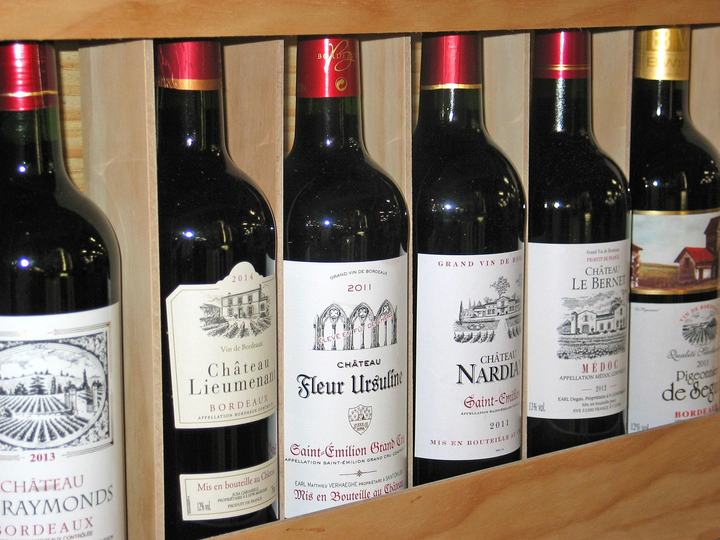
French wine labels lead with the place, not the grape. Once you know how the system works, a label tells you where the wine comes from, how it is classified and who made it.
Place Before Grape
On most French wines, the most prominent word is the name of a place: Sancerre, Margaux, Chablis, Chateauneuf-du-Pape. The grape varieties are set by the rules of that place, so the label often does not mention them. White Sancerre is Sauvignon Blanc, Chablis is Chardonnay and red Burgundy is Pinot Noir. Alsace is the main exception and names the grape on the label, as do many wines from the broader regional categories.
The Three Quality Tiers
- AOP or AOC (Appellation d'Origine Protegee or Controlee): the strictest tier, with rules on the area, the grape varieties, yields and methods. France has more than 360 wine appellations.
- IGP (Indication Geographique Protegee, formerly Vin de Pays): larger areas with more freedom over grapes and methods. Pays d'Oc, covering the Languedoc-Roussillon, is the best known, and its labels usually name the grape.
- Vin de France: wine that can come from anywhere in France, with the fewest rules. It may show the grape and the vintage, and some ambitious producers use it to work outside the appellation rules.
The label in the photograph at the top of this page reads Pays d'Oc: an IGP wine, which is why it names its grape, Cabernet Sauvignon, alongside the 2010 vintage.
Classification Words
On top of the appellation, some regions rank individual estates or vineyards.
- Bordeaux: Grand Cru Classe en 1855 marks the estates ranked in the 1855 Classification, nearly all of them in the Medoc and Sauternes. Saint-Emilion has its own classification, Premier Grand Cru Classe and Grand Cru Classe, revised roughly every ten years. Saint-Emilion Grand Cru on its own is an appellation, not a classification.
- Burgundy: the vineyard is ranked rather than the producer. Grand Cru wines carry the vineyard name alone, such as Chambertin or Montrachet. Premier Cru wines show the village, the vineyard and Premier Cru or 1er Cru. Village wines name the commune, and regional wines are labelled Bourgogne.
- Champagne: Grand Cru and Premier Cru refer to the rating of the villages where the grapes were grown.
Other Words Worth Knowing
- Mis en bouteille au chateau or au domaine: bottled at the estate where the grapes were grown.
- Negociant: a merchant who buys grapes or wine and bottles it under their own name.
- Vieilles vignes: old vines. The term has no legal definition, so its meaning varies from producer to producer.
- Sec, demi-sec, moelleux, doux: from dry to sweet, often seen on Loire Chenin Blanc such as Vouvray.
- Brut Nature, Extra Brut, Brut, Extra Dry, Sec, Demi-Sec, Doux: Champagne sweetness levels, from driest to sweetest. Note that Extra Dry is sweeter than Brut.
- RM and NM: small letters on a Champagne label showing a grower who makes their own wine (Recoltant-Manipulant) or a house that buys in grapes (Negociant-Manipulant).
- Cuvee: a particular blend or selection, often a producer's top wine.
Vintage, Alcohol and the Small Print
The vintage is the year the grapes were harvested; non-vintage wines, including most Champagne, are blended from several years. The label must also state the alcohol level and the volume, and declare sulphites, usually as contient des sulfites.
Three Tiers at a Glance
- AOP or AOC: the strictest rules
- IGP: regional, often named by grape
- Vin de France: the widest freedom